I didn’t know where I was going — only that I had to get away.
The city was too loud. My thoughts were louder. A fog had settled in my chest for weeks, and nothing seemed to clear it. On a whim, I opened a bus app, picked a random small-town destination, and bought the ticket.
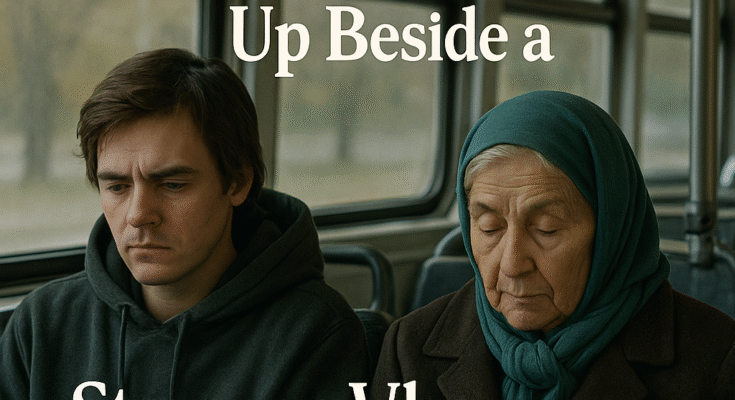
The bus was half-empty, just the way I needed. I slumped into a window seat, pulled my hood over my head, and watched the gray blur of the highway roll by. That’s when she boarded.

She looked about 70, with a teal scarf wrapped tightly around her neck and a notebook clutched in her hands like it held the world. Without asking, she sat beside me.
“You smell like someone trying to forget something,” she said.
I blinked. “Excuse me?”
She smiled without looking at me, still writing in her notebook. “Don’t worry. I’m not judging. I’m doing the same thing.”
I should’ve switched seats. But I didn’t.
The ride went on. Trees turned to fields. Silence turned to scattered conversation. She said her name was Miriam. She wrote stories for herself. “Not to publish,” she said. “Just to keep from disappearing.”
At some point, I dozed off. When I woke, she was scribbling again.
“This one’s about you,” she whispered, as if confessing a secret. “You were eight. Your father left a note on the kitchen table with a drawing of a paper crane. You tried to fold one just like it for weeks after, didn’t you?”
I froze. My heart crawled into my throat.
“How do you—?”
She turned the notebook toward me. There it was — the red and blue paper crane, just like the one he drew.
“I saw it in a dream,” she said, matter-of-fact. “Some dreams are meant to be shared.”
I didn’t speak the rest of the trip. Neither did she. But when we got off the bus, she handed me the notebook.
“Write the rest. It’s your turn now.”
I never saw her again. But I did what she said.
I started writing.
And slowly, the fog lifted.


