Miguel grew up learning the schedule of hunger like other kids learned cartoons, because his mother’s trash route decided whether dinner was warm, cold, or simply missing that night.
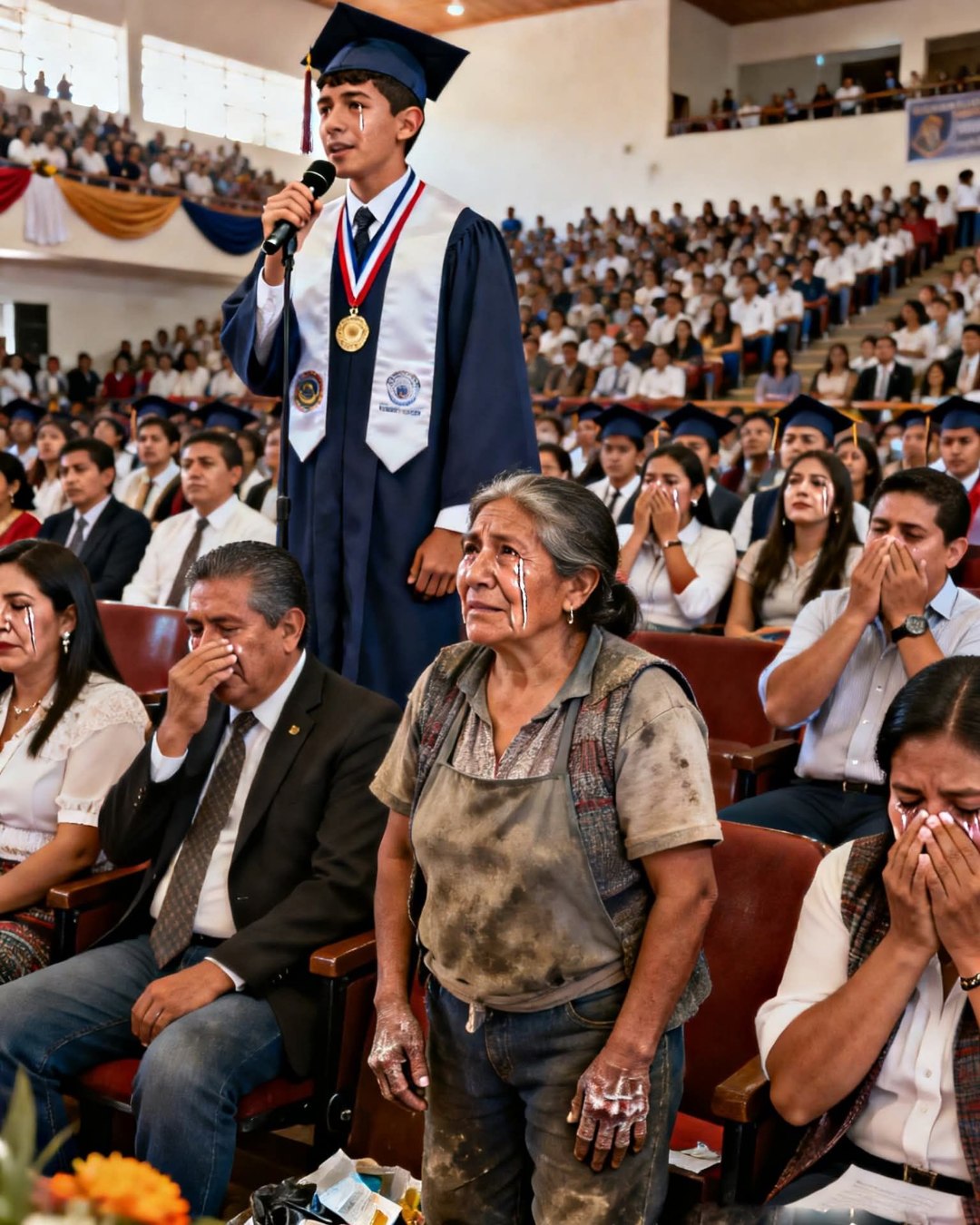
At school, classmates treated his last name like a punchline, and they treated his mother’s uniform like proof that he deserved less air, less respect, and less future.
He knew the rules without anyone explaining them: keep your head down, laugh when they laugh, and never mention the smell of work that clung to your backpack.
While other kids tore open brand-new toys and greasy fast food, Miguel waited for leftovers, and he learned to eat quietly so nobody could accuse him of “wanting too much.”
Every morning, he watched his mother lace up boots that had outlived several presidents, kiss him gently, and leave before sunrise to clean up what everyone else refused to see.
People love cleanliness the way they love magic: they enjoy the result, deny the process, and pretend the hands that make it happen are somehow “less” than the hands that clap.
That’s where the bullying started, because children don’t invent cruelty from nothing—they borrow it from adults, from jokes at dinner tables, from comments said loudly in supermarkets.
They called him “trash boy,” they held their noses when he passed, and they acted like his future was already sorted into the same bin as his mother’s labor.
Here’s the part that makes this story uncomfortable: Miguel’s grades were excellent, but excellence didn’t protect him from a system that confused poverty with failure.
Some teachers praised him like a rare exception, which sounds kind until you realize it implies everyone else in his neighborhood is expected to lose before the race begins.

Miguel began to understand that “merit” is often a costume worn by privilege, because it’s easy to look talented when you’ve never had to fight for sleep, food, or peace.
And when he heard classmates say, “If you work hard, you’ll escape,” he wondered why escape was the only dream offered, instead of dignity where you already stand.
At home, his mother didn’t speak in motivational quotes; she spoke in practical truths, like “Drink water,” “Study,” and “Never let them make you ashamed of honest work.”
She also told him something more radical than any speech: “A city that laughs at the people who keep it alive is a city that has forgotten what human beings are.”
Still, Miguel stayed silent for years, because silence is what you choose when you’re told your story will make people uncomfortable, and comfort is treated like the highest law.
He watched rich kids take credit for group projects, watched counselors steer poor students toward “realistic options,” and watched applause get reserved for people already holding the microphone.
By senior year, he had heard every version of the same insult, including the one that pretends to be advice: “Don’t take it personally, it’s just how people are.”
But “how people are” is exactly the problem, because cruelty becomes tradition when everyone shrugs, and tradition becomes policy when nobody dares to name it out loud.

Graduation arrived like a stage built on invisible labor, with shiny gowns, polished shoes, and families posing for photos on sidewalks cleaned by workers nobody thanked.
Miguel’s mother sat in the back row, hands rough, nails stained, eyes proud in a way that didn’t ask permission from anyone’s opinion.
When Miguel’s name was called for a student address, people whispered, because the “trash boy” was about to represent their school, and that made their prejudice look stupid.
He stepped to the podium and saw faces that had laughed at him, faces that had looked away, and faces that had benefited from his silence without ever admitting it.
His speech was prepared, but he didn’t start with achievements, because he knew trophies can distract from truth, and truth was the only thing that could cut through the noise.
He began by describing childhood in simple images—waiting for leftovers, pretending not to hear insults, and watching his mother work so hard that exhaustion became normal.
Some people smiled politely, the way audiences do when a “sad story” is being served safely, packaged as inspiration without demanding anything from the listener.
Then Miguel did the thing that makes this story spread like fire: he refused to be inspirational in the comfortable way, and he refused to let dignity be reduced to a lesson.
He paused, looked toward the back row, found his mother’s eyes, and decided he would not graduate into the same quiet agreement that had protected cruelty for years.
And then he said one sentence—one line that was not a poem, not a slogan, but a mirror—and the auditorium turned so still you could hear breath catch in throats.
He said: “If you ever called me trash, remember this—my mother carried what you threw away, and she never once threw away a human being.”
That sentence doesn’t go viral because it’s clever; it goes viral because it exposes a moral contradiction that many people depend on to keep feeling superior.
Suddenly, the laughter in their memories sounded uglier, the jokes sounded smaller, and the social hierarchy they treated as “natural” looked like a choice they had been making daily.

Some students cried because they recognized themselves, not as villains in a movie, but as ordinary people who had followed the crowd and harmed someone without ever admitting it.
Some parents cried because they realized their children had learned contempt at home, from comments about “those jobs” and “those neighborhoods,” and from the belief that wealth equals worth.
And some teachers cried because they remembered moments they stayed neutral, forgetting that neutrality often sides with the powerful, especially when the powerless are being mocked for surviving.
Here’s where the controversy starts, and why people argue in comment sections for days: Miguel didn’t just defend his mother—he accused a whole community of selective gratitude.
He forced the question nobody wants to answer honestly: why do we praise “hard work” in speeches, yet treat the hardest workers as invisible until we need their story for inspiration?
The debate gets hotter because many people react defensively, saying “It’s just kids being kids,” as if childhood cruelty is weather, not culture, and not something adults help create.
Others say Miguel “humiliated” the bullies, ignoring that humiliation was the daily currency Miguel paid for years, and that accountability feels like humiliation only to those unused to it.
Then come the people who try to turn it into a motivational poster, because they prefer uplift over discomfort, and they prefer a hero story over examining their own bias.
But Miguel’s message wasn’t “Believe in yourself and you’ll win,” it was “Stop building a society where someone must suffer quietly so others can feel clean and superior.”
That’s why fans share it, because it’s not only about Miguel—it’s about every worker we depend on while pretending we don’t, from sanitation crews to janitors to street vendors.
It challenges a sick social habit: we romanticize poverty when it makes a good story, but we punish poor people when they show anger, demand respect, or refuse to smile.
Miguel’s graduation line doesn’t ask for pity, and that’s exactly what shakes people, because pity keeps power intact while respect requires us to change how we treat “low-status” work.
If your first reaction is to argue that Miguel should have “moved on,” ask yourself why moving on is always demanded from the harmed person, and rarely from the people who did harm.
Because the truth is messy: a city can be modern and still be cruel, a school can be prestigious and still be biased, and “success” can still rest on someone else’s invisibility.
Miguel didn’t become powerful by becoming rich in that moment; he became powerful by naming what everyone knew but avoided, and by refusing to let his mother be treated as a stereotype.